
Trekking Trail Nepal is a platform designed to simplify how trekking and travel services are presented, managed, and booked.
The goal was not just to build a website, but to create a system that could handle complex travel offerings packages, content, users, and transactions within a clear and structured environment.
1. The Problem
Tourism platforms often grow without structure.
Packages are added over time, content becomes inconsistent, and managing bookings, writers, and updates turns into a fragmented process.
For Trekking Trail Nepal, the challenges were:
-
difficulty in organizing and presenting multiple tour packages
-
lack of efficient search for users to find relevant treks
-
manual handling of bookings and payments
-
no structured system for content contributors
-
limited visibility into platform activity and performance
The issue was not the lack of features.
The issue was the lack of a unified system.
2. Our Approach
We approached the project as a system design problem, not just a website build.
Before writing code, we focused on:
-
how users search and choose trekking packages
-
how content is created and managed internally
-
how transactions and affiliations flow through the system
-
how different roles interact with the platform
The objective was clear:
Create a platform that is easy to use externally and easy to manage internally.
3. The Solution
We developed a structured web platform that connects user experience, business operations, and content management into one system.
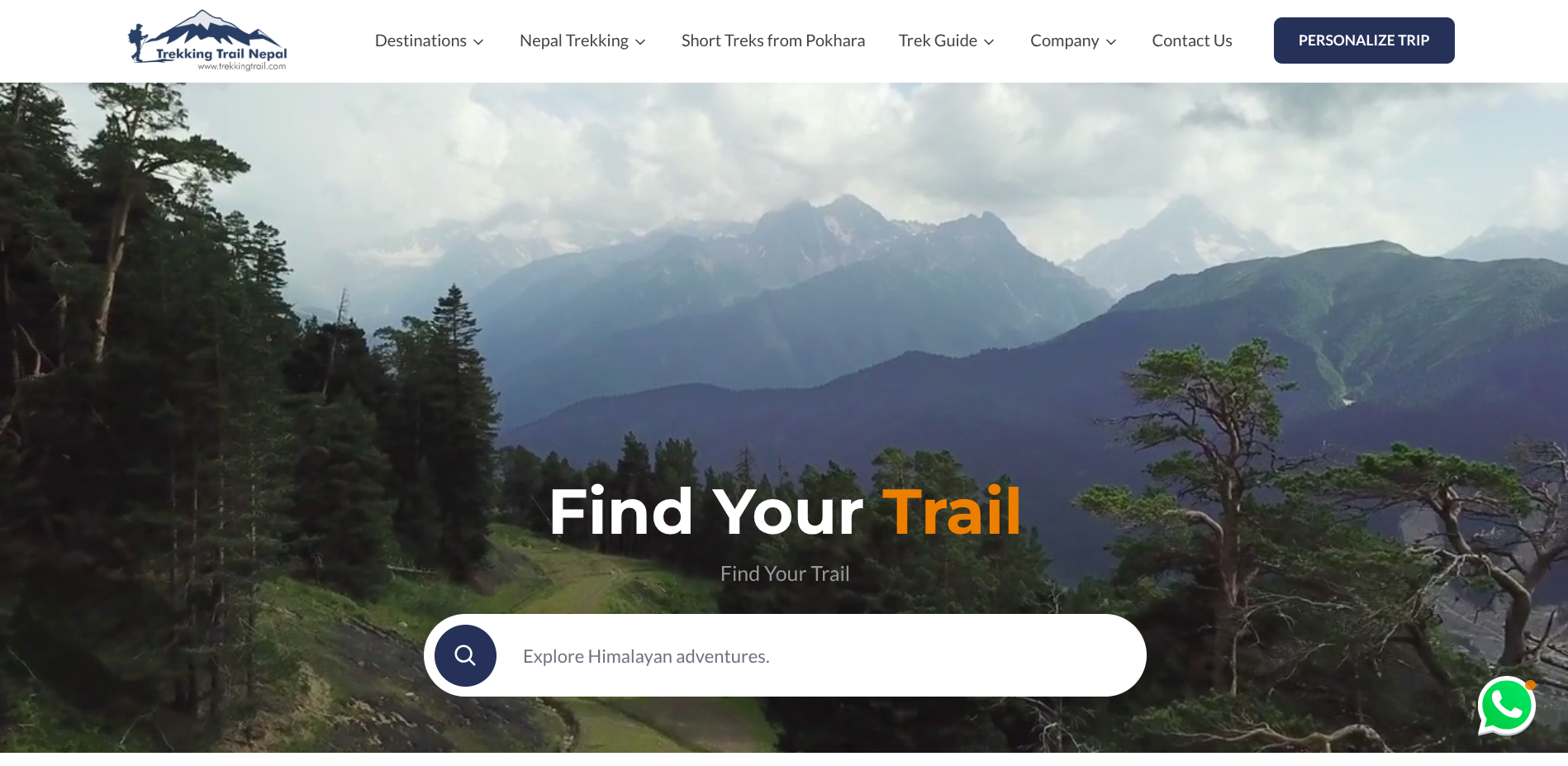
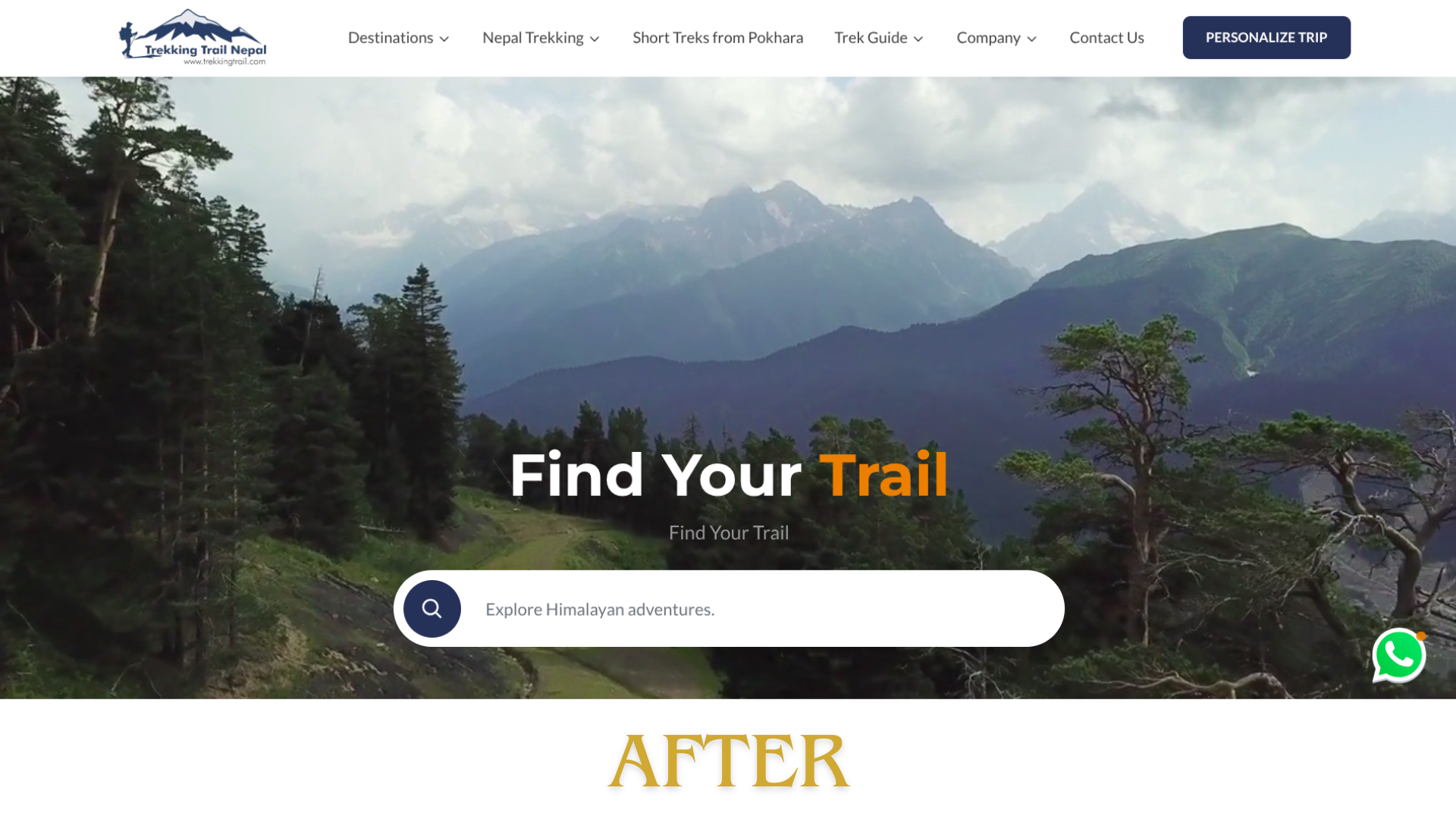
3.1. Advanced Search System
Users can filter and find trekking packages based on relevant criteria, making navigation faster and more intuitive.
3.2. Online Payment Integration
Secure and streamlined payment handling allows users to complete bookings directly through the platform.
3.3. Affiliation Program for Tour Packages
A complete affiliate system was implemented, allowing partners to promote and manage tour packages efficiently.
3.4. Role-Based Access for Content Management
Writers and contributors are assigned specific roles, ensuring controlled content creation and consistency across the platform.
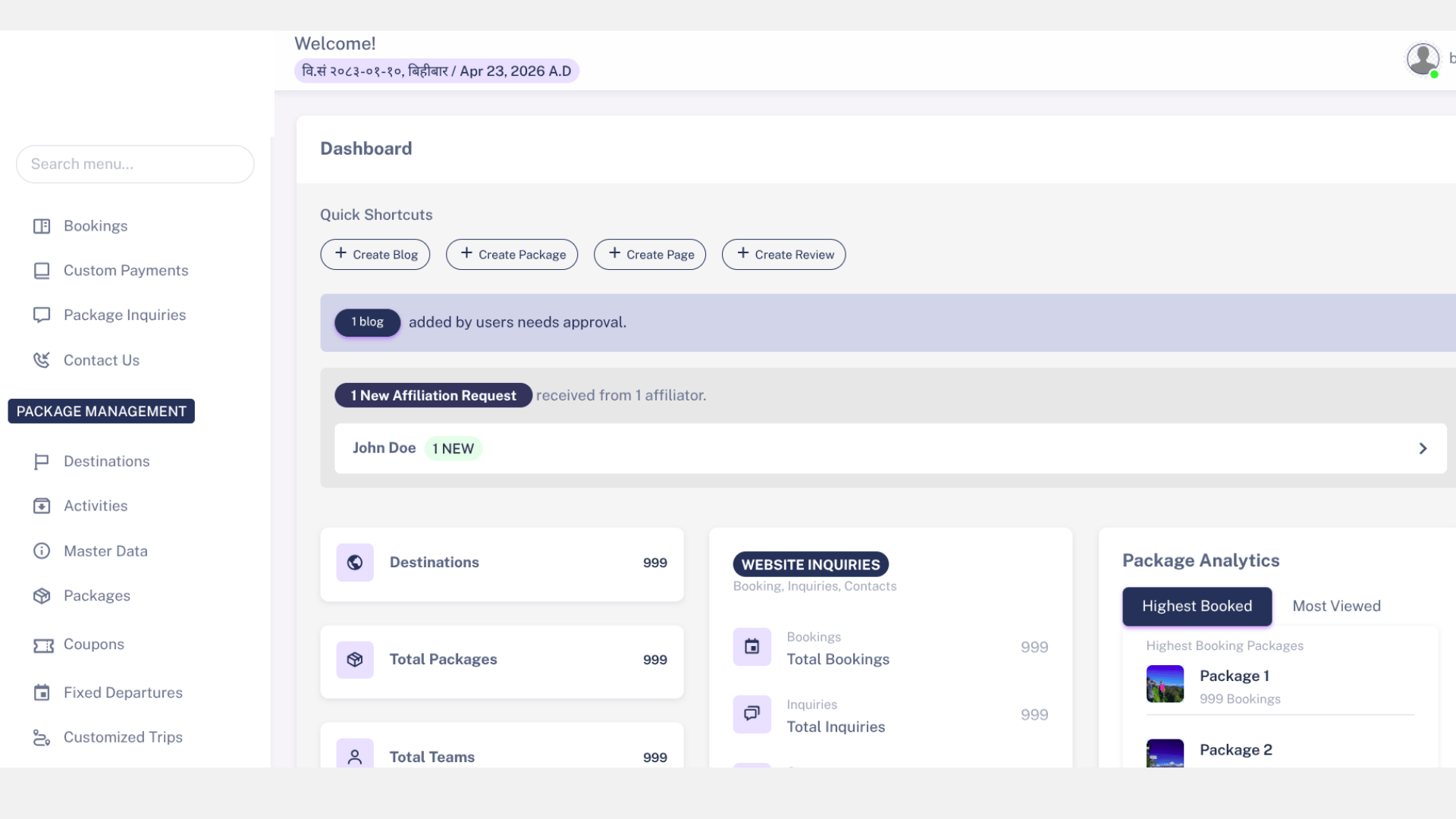
3.5. Advanced Admin Dashboard
A centralized dashboard provides visibility into platform activity, content updates, and operational workflows.
3.6. Structured Package Management
Tour packages are organized in a way that improves clarity for users and simplifies updates for the team.
4. The Outcome
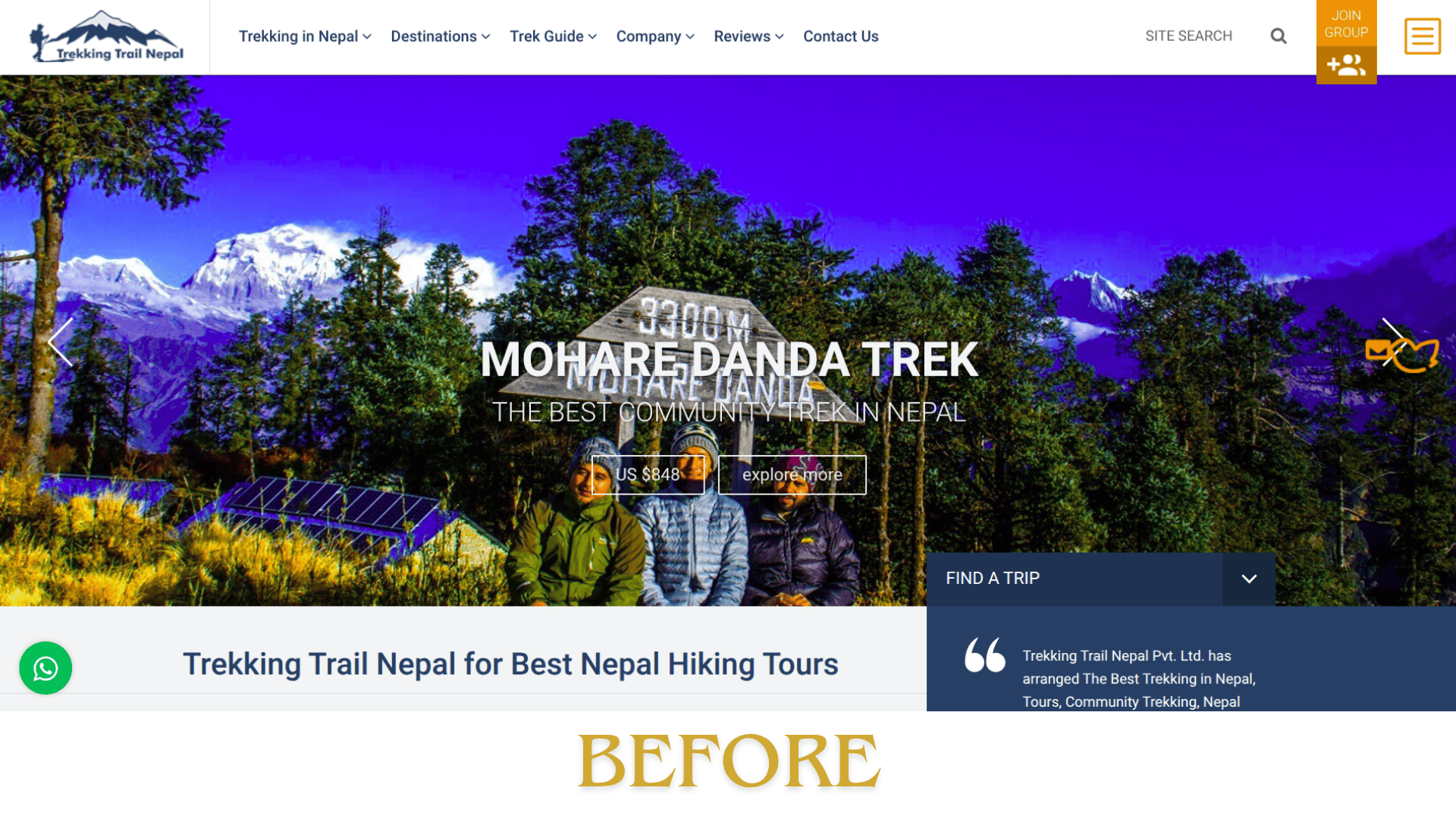
The platform shifted from a basic website to a working system that supports both users and internal operations.
4.1. Improved User Experience
Visitors can now easily search, explore, and understand trekking options without confusion.
4.2. Streamlined Booking Process
Online payments and structured flows reduce manual intervention and improve efficiency.
4.3. Better Content Management
Writers and admins work within a defined structure, reducing inconsistencies.
4.4. Operational Clarity
The dashboard provides better visibility, allowing the team to manage the platform with confidence.
4.5. Scalable Foundation
The system is designed to grow as more packages, users, and partners are added.
5. What This Project Represents
Trekking Trail Nepal reflects a common pattern we see:
Businesses don’t struggle because they lack tools.
They struggle because their systems are not structured.
By focusing on:
-
user flow
-
internal workflow
-
system design
we transformed a growing platform into a manageable and scalable system.
6. Final Thought
A tourism platform is not just about showcasing destinations.
It is about connecting users, content, and operations in a way that makes the entire experience clear and reliable.
That is what we focused on and that is what made the difference.